The World Is Talking — Can Your Business Be Heard?
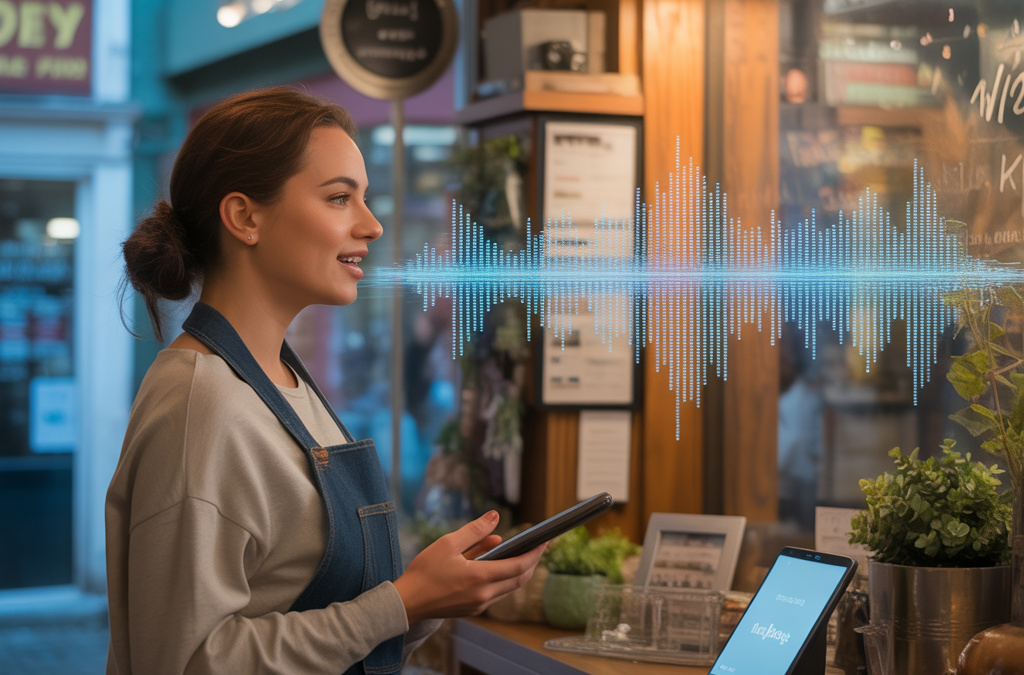
It happens a hundred times a day. Someone walking down the street says, “Hey Google, where’s the best pizza near me?” or “Siri, find a plumber close by.” Within seconds, an invisible algorithm decides which businesses get named — and which disappear.
That’s voice search in action. And for local businesses, it’s quietly reshaping the entire landscape of discovery. If your business isn’t optimized to speak the language of voice assistants, you’re effectively invisible in the fastest-growing search channel of 2025.
What Voice SEO Really Means — and Why It Matters Now
Voice Search Optimization (or VSO) isn’t about chasing gadgets; it’s about aligning your business with how people naturally talk. We’ve moved from keywords on a keyboard to full conversations with machines.
Today, over half of all mobile users rely on voice assistants weekly, and most of those queries are local. Whether it’s asking Alexa for a “nearby car wash” or Google for “best tacos open late,” consumers are no longer typing — they’re talking.
For local businesses, that means opportunity. The ones who structure their content for natural language, local context, and conversational intent will own tomorrow’s search results.
The Core of Voice Optimization: Sounding Human Online
1. Map Your Content to Real Conversations
Think about how your customers actually speak.
They don’t say, “Italian restaurant Manhattan.”
They say, “What’s a good Italian place near me?”
The difference is everything.
Use real-speech phrasing in your titles, FAQs, and service pages. Tools like AnswerThePublic or People Also Ask can reveal the exact questions your customers ask aloud. Integrate those into your website as headings and answers — written just like natural conversation.
2. Focus on Long-Tail, Question-Based Phrases
Voice queries are longer, more specific, and emotionally charged.
Instead of chasing “plumber” or “SEO services,” focus on full-sentence phrases like:
-
“Who fixes leaking pipes near me right now?”
-
“What’s the best-rated hair salon that takes walk-ins?”
-
“How can I grow my small business with digital marketing?”
These phrases match the linguistic rhythm of speech — and that’s exactly what Google’s voice algorithms understand best.
Building Trust Through Context: The Entity Connection
Voice search runs on understanding relationships, not just words. That’s where entities come in.
Your business isn’t just a name and address — it’s a node in Google’s knowledge graph. To help algorithms connect the dots:
-
Add structured data (schema.org) that describes your services, service areas, and hours.
-
Keep your NAP (Name, Address, Phone) identical everywhere — website, Google Business Profile, Yelp, Facebook.
-
Use related terminology throughout your pages to help Google grasp your full context.
When your digital footprint is semantically consistent, assistants like Siri and Alexa are more likely to trust your business as the right answer.
Writing for Voice: Short Answers, Real Tone
Craft “Speakable” Moments
Voice assistants love content that answers questions clearly and quickly.
Each major topic on your site should include a few short, crisp paragraphs written as if you were responding in real time:
“The easiest way to improve local SEO for your small business is to claim and optimize your Google Business Profile. It helps customers find you faster and builds trust instantly.”
That’s what AI assistants pull when someone nearby asks a similar question. Think of it as snippet-ready storytelling.
Stay True to the Way People Actually Talk
Avoid robotic, keyword-stuffed sentences. Instead, blend expertise with personality. Use first-person plural (“we,” “our”) when it feels natural. Include local flavor — mention your town, your neighborhood, or even landmarks. The more real you sound, the better you rank in the voice-driven web.
Local SEO Tactics That Boost Voice Visibility
Optimize Your Google Business Profile (GBP)
Your GBP is your voice search passport. Update it weekly — add photos, post updates, and write descriptions in plain, conversational language.
Example:
“Family-run coffee shop in downtown Austin serving organic espresso and pastries baked fresh every morning.”
That line is both human and algorithm-friendly — exactly what voice search prioritizes.
Encourage Voice-Friendly Reviews
Ask happy customers to mention what and where they bought. For example:
“Found this salon when I asked Alexa for a hair stylist near me!”
Reviews like this feed local algorithms with the kind of contextual cues that power “near me” results.
Speed, Security, and Simplicity
Voice search is overwhelmingly mobile. That means your site must be:
-
Fast (under two seconds to load)
-
Secure (HTTPS)
-
Visually clean and responsive
Every friction point you remove increases your odds of being recommended by AI assistants.
Looking Ahead: Predictive and Context-Aware Search
Voice search is evolving into something even bigger — predictive discovery. Soon, assistants won’t just respond to queries; they’ll anticipate them.
Imagine Siri reminding you about a mechanic before your next scheduled service, or Google suggesting a nearby lunch spot because it recognizes your commute pattern.
That’s where search is headed — and local businesses that prepare now, by feeding clean, structured, and conversational data to AI systems, will dominate those future interactions.
Products / Tools / Resources
Here are practical tools and platforms to help local businesses optimize for voice search in 2025:
-
AnswerThePublic – For uncovering conversational, question-based keywords.
-
Schema.org Markup Generator – For adding structured data to your site.
-
Google Business Profile Manager – For controlling your local presence and reviews.
-
Ubersuggest or Ahrefs – For long-tail keyword research and competition analysis.
-
PageSpeed Insights – To ensure your mobile performance meets voice standards.